

Product Description
Key Features
- Multi-tube stacking — 5 to 20 tubes loaded simultaneously for uninterrupted feeding
- 0.8 sec/cycle feed speed at ±0.5mm positioning accuracy
- Fiber-optic sensor verifies component presence at every pick cycle
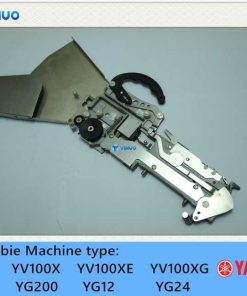
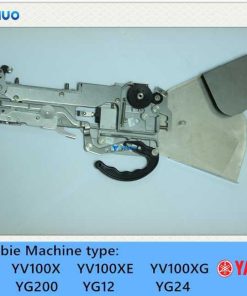
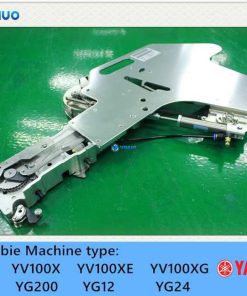
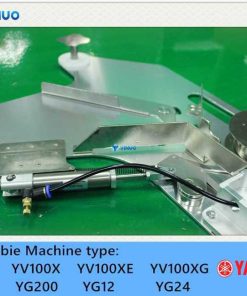
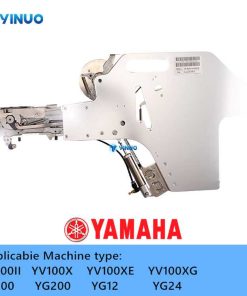
- Compatible with Yamaha, JUKI, FUJI, Panasonic SMT and THT machines
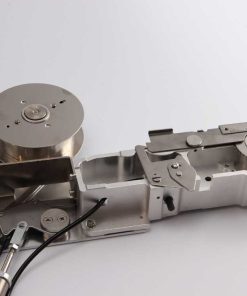
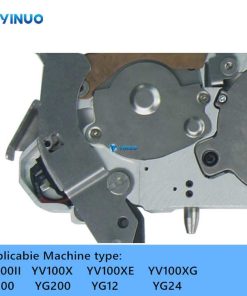
- Custom rail adapter matched to your machine — plug into the feeder table directly
- IO communication or standalone PLC control — no machine software changes
- Accepts PVC and aluminum tubes from 200mm to 650mm length
Applications
- SMT pick-and-place lines feeding DIP ICs, relays, and terminals from tubes
- THT insertion stations feeding through-hole DIP components for mixed-technology PCBs
- High-mix production where tape packaging is unavailable or too costly for DIP parts
Technical Specifications
| Parameter | Value | Unit |
| Feed speed | 0.8 | sec/cycle |
| Feed accuracy | ±0.5 | mm |
| Tube stacking | 5–20 | tubes |
| Component size range | 3×3×3 to 25×25×25 | mm |
| Tube material | PVC / aluminum | — |
| Tube length | 200–650 | mm |
| Tube wall thickness | >0.6 | mm |
| Drive | Stepping motor, 600 rpm | — |
| Control | PLC (ARM STC32) | — |
| Operating voltage | 24V | DC |
| Air pressure | 0.4–0.6 | MPa |
| Machine connection | IO or standalone | — |
| Dimensions (L×W×H) | 1350×92×115 | mm |
| Weight | ~25 | kg |
| Service life | ~5 | years |
| Warranty | 12 | months |
FAQ
What components can a DIP tube feeder handle?
DIP ICs (8–40 pins), relays, transformers, terminals, square and round capacitors — any component packaged in PVC or aluminum tubes with wall thickness above 0.6mm and length between 200–650mm. Component body size: 3×3×3mm to 25×25×25mm.
Does this work with both SMT and THT machines?
Yes. The feeder mounts on SMT pick-and-place feeder tables for DIP component placement, and on THT insertion stations for through-hole assembly. A machine-specific rail adapter is provided for Yamaha, JUKI, FUJI, or Panasonic — one feeder core, one adapter per brand.
How does multi-tube stacking work?
Load 5 to 20 tubes into the stacking magazine. The feeder auto-advances through tubes — when one tube empties, the next drops into the feed position. Fiber-optic sensing detects empty tubes and triggers the switch. No operator intervention between tube changes.