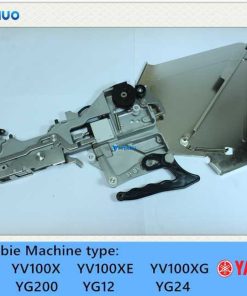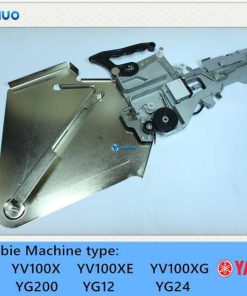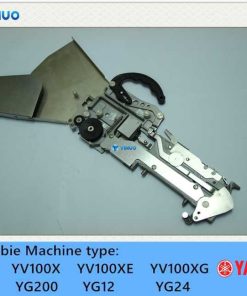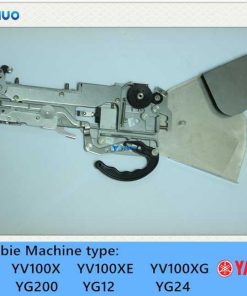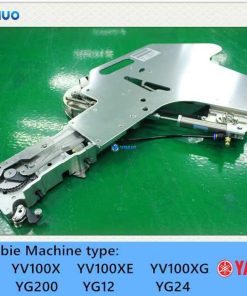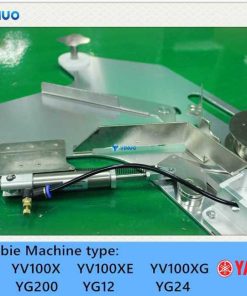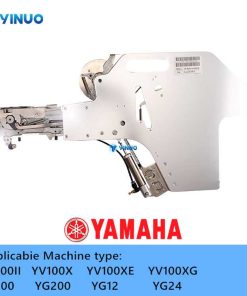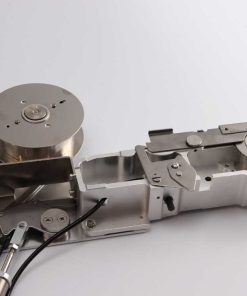
What an SMT Stick Feeder Does on a Pick and Place Machine
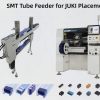
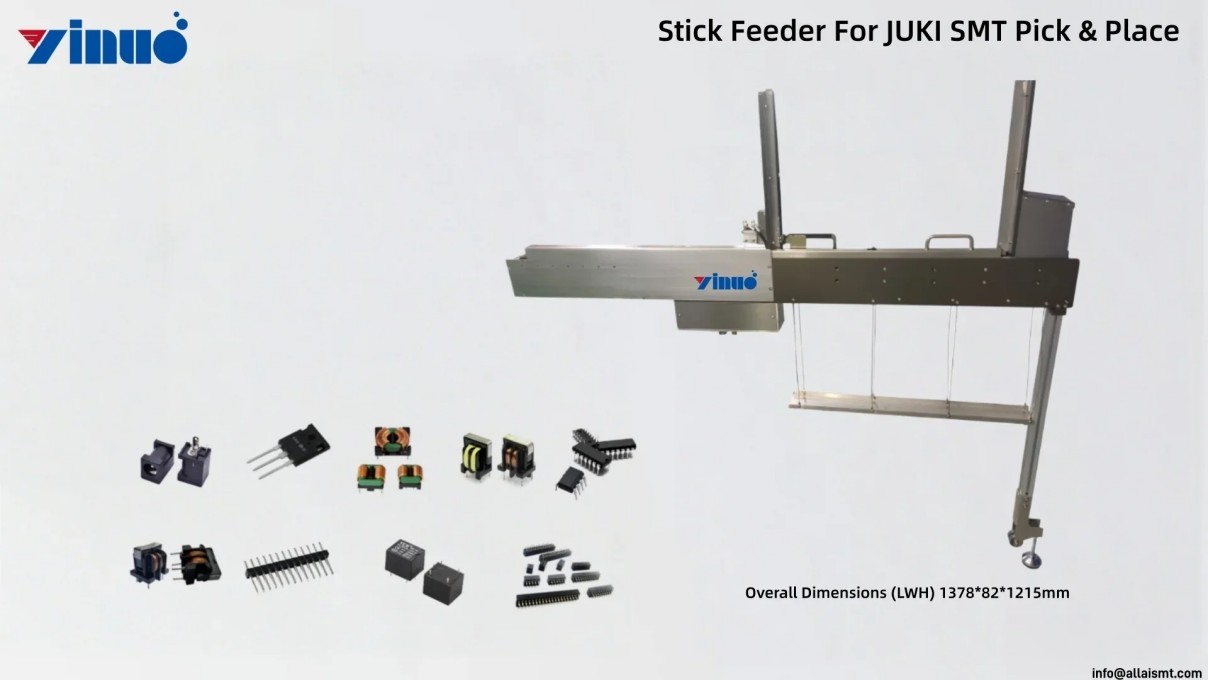
On an SMT JUKI pick and place line, a stick feeder is a component supply unit that presents parts from tubes at a fixed pick-up point. The placement head picks each part exactly as it picks a tape-fed resistor — same nozzle, same vision routine, same placement program.
The name causes confusion, so define it precisely. A stick feeder is a tube feeder — “stick” and “tube” describe the same packaging. ICs, connectors, and crystals leave the factory in rigid plastic or aluminum sticks, not on reels. The SMT stick feeder holds those sticks, advances one component at a time, and stops when the stick runs empty.
Two mechanical designs exist. A machine-mounted unit plugs into one feeder slot and holds a single tube. A magazine unit holds 10–20 tubes and switches automatically as each one empties. Both deliver to the same place: a pick position the machine already knows.
The reason this matters is packaging. A reel carries 2,000–5,000 passives; a tube carries 30–50 ICs. No one winds a QFP-64 onto a reel for a 500-board run — the tooling cost exceeds the part cost. Tube packaging persists because it is cheap, and a stick feeder is what makes cheap packaging machine-feedable.
Why Manual Tube Loading Breaks at Line Speed
An operator loading tubes by hand is not slow in isolation. The problem is arithmetic.
A standard SOIC-16 tube holds 30–50 parts. At 5,000 CPH, forty components leave that tube in 29 seconds. Nobody reloads a tube every 29 seconds for eight hours, so the line does the only thing it can: it stops, or it runs the tube-fed section at operator pace.
Those stops cost more than the operator’s wage. Every stop drops vacuum, dumps the placement head queue, and forces a re-check of the boards in process. On a high-mix line with five or six tube-packed parts per board, the interruptions dominate the shift.
Manual loading also introduces a defect path that does not exist with machine feeding. A hand-inserted tube can sit a millimeter off position. The component then presents at an angle, the nozzle picks off-center, and the placement lands rotated — a defect the vision system may reject as a pick error long after the real cause, a mis-seated tube, went unnoticed.
The fix is mechanical, not procedural. An SMT stick feeder changes the arithmetic instead of asking the operator to work faster. Move the tubes into a feeder that references its own position, and both the stop and the mis-seat disappear.
How an SMT Stick Feeder Delivers Precise PlacementI hope this email finds you well.
Precision in tube feeding comes from three things, and none of them is expensive.
A fixed pick position. The feeder does not move a component to the nozzle. It brings every component to one point, at one height, and holds it there. Repeatability is ±0.1 mm — well inside the tolerance of an SOIC-16 lead span and inside what the machine’s downward-looking camera needs to correct rotation.
A channel cut to the tube. The guide rail is machined to the outer profile of the customer’s tube, not to a nominal size. A loose channel is the single largest cause of tube-feed defects: the part tilts, the lead frame catches, and the pick height varies. A fitted channel keeps the component flat from the first part to the last.
Controlled advance. A pneumatic pusher or an electromagnetic vibrator moves the stack one pitch at a time. Advance force is set below the level that would let a light component ride up on its neighbour, which is why vibration-assisted models handle both a 0.15 g SOT-23 and a 3 g connector on the same feeder.
Together these three turn a tube of loose ICs into a repeatable supply stream. The placement head sees no difference between a tube-fed QFP-64 and a tape-fed one, which is why precise component placement on tube parts is a feeder question rather than a machine question.
Key Takeaways
- A stick feeder feeds components that ship in plastic or aluminum tubes — SOIC, SSOP, small QFP, connectors, crystals — into a pick and place machine.
- It replaces an operator who swaps a tube every 20–30 seconds with a fixed pick-up point that runs at 2,500–5,700 CPH.
- Pick position holds ±0.1 mm repeatability, so tube-fed parts place with the same accuracy as tape-fed parts.
- It is the lowest-cost feeder category in SMT: no motorized pitch drive, no tape splicing, no reel inventory.
- Entry cost is low, but the real saving is labor — one reload instead of twenty interruptions per magazine.
What We Do for Your SMT Production Line?
You only need to provide component samples and machine model numbers. Based on your exact part dimensions, our engineers design custom feeder adapters and CNC-machine each rail from scratch. We strictly avoid off-the-shelf parts or generic sizes to ensure optimal orientation. Before leaving our Shenzhen factory, every unit undergoes a full operational test on a matching machine, and we provide a performance video so you can verify its functionality prior to delivery.
We provide dedicated rail adapters for all major SMT brands, including ASM SIPLACE, YAMAHA, FUJI, Panasonic, JUKI, and Samsung.
Tag and Tube Feeders: 4–7 weeks.
MOQ: 1 unit. We support single-unit testing on your production line before scaling to mass production.
We fabricate custom nozzles from ceramics, tungsten carbide, and rubber, precision-formed to match your specific part geometry while maintaining a feed failure rate below 0.5%. To streamline your procurement, feeders and nozzles are shipped together in a single package.

| Category | Description |
| LABEL FEEDER | Mounts on SMT pick-and-place machines to apply labels, protective films, and thermal pads to PCBs. YINUO builds label feeders compatible with JUKI, FUJI, YAMAHA, ASM, and Panasonic platforms. |
| ASM FEEDER | Precision component delivery systems for Siemens ASM SIPLACE pick-and-place lines. YINUO supplies ASM-compatible tape, tube, and tray feeders for SIPLACE SX, X, and D series. |
| FUJI FEEDER | Delivers surface-mount components to FUJI NXT, XP, and AIMEX series placement heads. YINUO provides FUJI-compatible tape, tube, tray, and vibratory bowl feeders. |
| JUKI FEEDER | Core component delivery systems for JUKI RS, KE, FX, JV, and JM series machines. YINUO supplies tape, tube, tray, label, radial, axial, and custom odd-form feeders. |
| PANASONIC FEEDER | Serves Panasonic NPM, CM, and BM series pick-and-place machines. YINUO builds Panasonic-compatible tape, stick, and tray feeders with electric and pneumatic indexing. |
| SAMSUNG FEEDER | Supports Samsung (Hanwha) SM, SLM, and DECAN series platforms. YINUO supplies electric 8 mm feeders, dual-track tube feeders, and custom feeders for non-standard components. |
| THT CUSTOM FEEDER | Handles through-hole components on SMT odd-form modules or dedicated THT insertion machines. YINUO builds custom radial, axial, and odd-form feeders engineered to your component sample. |
| UNIVERSAL FEEDER | Machine-agnostic feeding systems compatible with multiple pick-and-place platforms. YINUO manufactures floor-standing tube feeders, vibratory bowl feeders, and cross-brand custom solutions. |
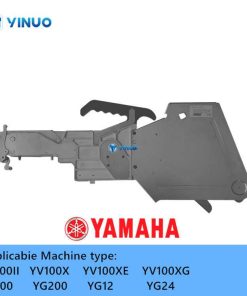
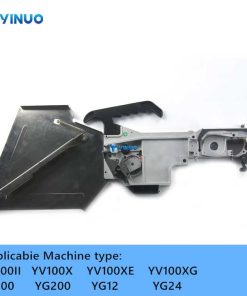
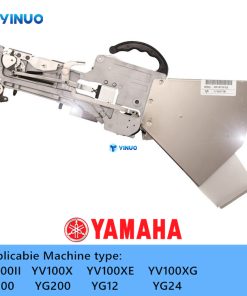
| YAMAHA FEEDER | Mounts on YAMAHA YSM, YS, and YG series pick-and-place machines. YINUO provides YAMAHA-compatible tape, stick, and tray feeders with quiet electric options. |